
What is a capstone project in college? It’s a final research assignment demonstrating the accumulated knowledge and practical skills you’ve gained throughout your studies.
- Duration: typically spans one or two semesters, requiring independent research and sustained effort.
- Core components: topic selection, literature review, research execution, and formal presentation of findings.
- Common types: research papers, product development, case studies, multimedia presentations, and field experiments.
- Success strategy: careful topic selection, structured planning, consistent effort, and willingness to seek guidance when needed.
Defining Capstone Project
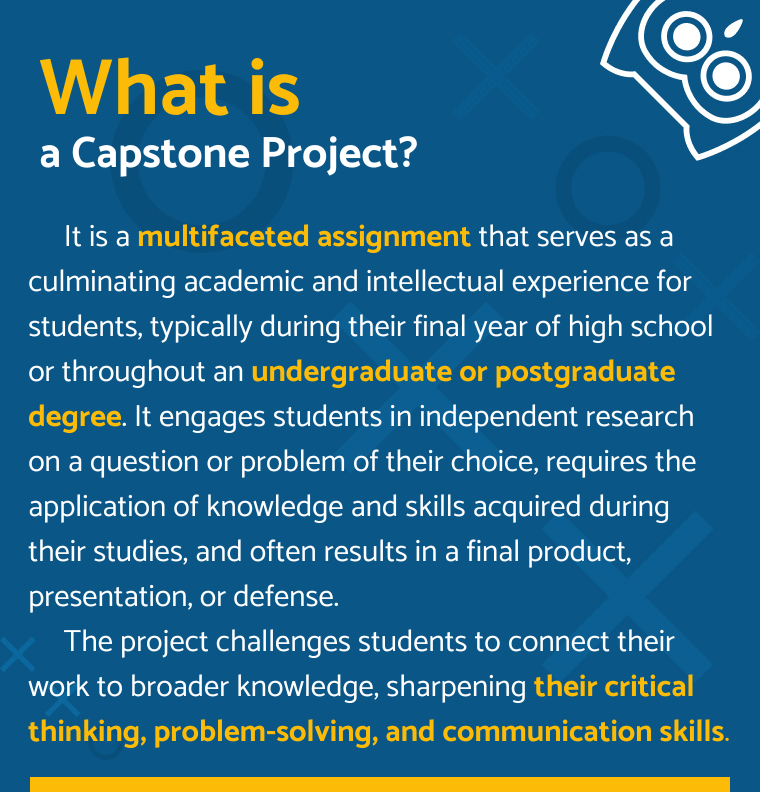
A capstone project in college is a final research assignment that demonstrates your knowledge and skills gained during your studies.
Let me break down the capstone project meaning for you clearly.
According to the University of Virginia, this task stretches over two semesters. You pick a topic independently, research it deeply, and prove you truly understand the subject matter inside out. UV offers solid guidance worth checking out, but I’ll explain the purpose of this significant work and share methods to overcome common hurdles that trip students up.
Here’s what makes understanding the capstone meaning college so crucial: it’s challenging, absolutely.
But also incredibly rewarding! You tackle this right at the finish line of your academic journey.
What makes writing a capstone project so difficult?
Simple answer: it’s research-intensive and demands you take full initiative, showcasing everything you’ve learned over the years.
No holding hands. No step-by-step instructions.
The core goal?
Push yourself to conduct meaningful research spanning several months. Not everyone handles that kind of marathon.
A capstone college course lets you demonstrate your capabilities in a tangible way. Plus, it doubles as a portfolio when you start job hunting — something employers actually look at.
Universities typically assign this during your final semester or year.
What does the capstone process actually look like?
Let’s say you’re tackling a nursing capstone project.
You’ll select a topic — maybe a profession-related challenge, a social issue affecting healthcare, or something genuinely interesting to you personally.
Then you gather data, carefully analyze the findings, and create a portfolio or presentation that tells a story.
During the presentation, you walk your class through the work and wrap up with solid conclusions backed by evidence.
The final product?
It could be written, filmed, or even multimedia — whatever best communicates your findings.
Common Development of a Capstone Project
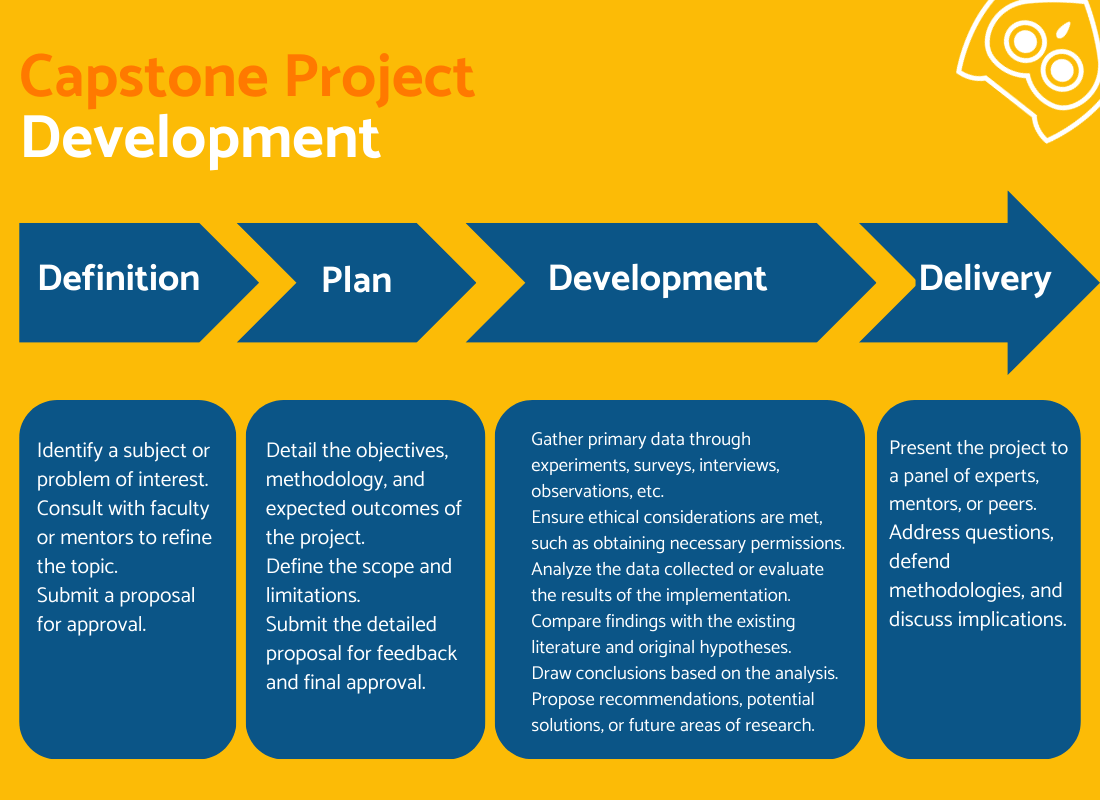
To develop a capstone project, students typically select a topic, conduct research, and prepare a presentation of their findings.
Colleges throw this assignment at various academic levels.
You might encounter it in Political Science, Criminal Justice, Biology, Literature — pretty much anywhere across the curriculum. Requirements shift dramatically depending on your program and department.
Usually, though? You’ll present something substantial at the end.
Here’s the typical framework I recommend following:
Step 1. Select a topic
Choosing the right one makes everything easier down the line.
Find the sweet spot.
Broad enough for proper research and multiple angles, but not so narrow you can’t find credible sources or data.
Step 2. Do a literature review
I know this sounds like busywork. Hear me out, though.
Professionals from capstone writing services swear this step pays off later in ways you can’t imagine at the start.
Never tackled a lit review before? No worries at all.
Just organize a section explaining the relevance of your sources, noting the background information they provide, and flagging any gaps in existing research.
This creates your roadmap moving forward.
You’ll build a strong foundation and spot weaknesses before they become major problems.
Step 3. Research your topic
Since you’ll present at the end, get creative in gathering facts and data.
Interview professionals working in your field. Observe events or processes firsthand. Hit the library, obviously — but don’t stop there.
Just ensure your research aligns with your outline and uses credible, authoritative sources that withstand scrutiny.
Step 4. Present your findings
Look at your research content first, then pick a delivery method strategically. Do a defense lecture to the class, field questions, the whole package.
Check out essay writing tips you can weave into your presentation style. Add graphics or slides to clarify complex points.
Before presenting, practice extensively. Mirror practice works. Friend practice works better.
Note what flows smoothly and fix where you stumble or lose clarity.
Now, what does this actually look like in practice? Here are real examples from successful students:
- Running scientific research for months (or a full year), studying ecological changes in your local community.
- Designing and building a robot or app to help people with disabilities navigate daily challenges.
- Starting an organization focused on serious social issues like hunger, poverty, war effects, or homelessness.
- Deep-diving into an industry or market and crafting an actual business plan with financial projections.
- Writing, directing, and filming a public service announcement for local TV broadcast.
See? Many different forms and approaches work.
Importance of a Capstone Project
A capstone project is important because it prepares students for real-world challenges and showcases their academic growth.
Why does understanding what is the purpose of a capstone project matter so much?
Several reasons jump out immediately.
Big one: It raises academic stakes dramatically during senior year.
How?
Often, students coast through their final year with easier courses that don’t challenge them. That hurts learning and leaves you unprepared for college-level work demands or career expectations.
A capstone project flips that script completely and forces you to stay engaged. It keeps you sharp, reduces learning loss, and pushes you toward meaningful field experiences.
What’s more, it boosts personal motivation dramatically and keeps you invested.
Working on topics you actually care about? Game changer for real. Suddenly you’re not just going through motions — you’re genuinely invested in outcomes.
Capstone projects also prove competence in measurable ways.
This work helps you figure out where you stand academically and professionally. It shows what you’ve genuinely learned throughout your studies rather than just memorized for tests.
Plus, getting involved in long-term projects that align with your ambitions forces you to think seriously about your career paths.
Career exploration becomes real rather than abstract.
You gain experience that’ll help down the road when interviewing or networking.
In addition, these projects significantly build your confidence in your abilities.
You gain a clearer sense of your strengths and a better overall self-understanding.
Always wins in my book.
Here’s the thing: a capstone project is a unique academic challenge serving as your final intellectual showcase before graduation.
The goal?
Demonstrate that you can independently research, analyze, and address specific issues without constant supervision.
2 Essential Skills You Get From a Capstone Paper
Finishing your project proves you can handle serious research independently.
Got a good grade? That becomes a strong reference for future academic pursuits when anyone asks about your achievements or capabilities.
Now, let’s talk honestly about presentation skills. Plenty of students are killer researchers who write excellent papers and consistently score high marks.
But presenting? A different skill entirely — and critical in the real world beyond academia.
Don’t waste this chance to show your university what you’ve got inside you. With the right game plan, you can build something genuinely impressive — maybe even enjoy the process.
Pick a practical topic you care about deeply, follow this guide carefully, and earn that A you deserve.
Types of Capstone Projects
As I mentioned earlier, a capstone project is a key piece of most university programs across disciplines.
Requirements vary widely depending on your major and institution. There are versions for juniors, seniors, and grad students at different complexity levels.
Depending on your degree program, you might encounter these types:
| Type | Description | Best For |
|---|---|---|
| Product Development | Creating concepts for products, tools, or services | Engineering, Business, Design majors |
| In-Depth Research | Extensive investigation projects with original findings | Sciences, Social Sciences, Humanities |
| Expositions | Comprehensive presentations or exhibitions | Arts, Education, Communications |
| Experiments | Hands-on experimental studies with data collection | STEM fields, Psychology, Health Sciences |
These can be done solo or in groups, depending on program requirements.
Main requirement across the board?
Your instructor carefully reviews your final proposal at the end and evaluates it against established criteria.
Choosing a Topic
My best advice? Pick something you genuinely care about personally.
If your capstone project is science-focused, consider exploring astronomy topics and building a compelling project around recent discoveries or unsolved questions.
Otherwise, what’s the point, really?
The process is long and demanding — genuine interest sustains you through tough patches subjects that.
Here’s general guidance on choosing your research theme wisely:
- Skip overly broad subjects that objectively can’t be managed in the available time realistically. If your topic feels massive and unwieldy, narrow it down systematically.
- Watch out for overly narrow topics, too, that limit your research options. You’ll struggle to find published articles and prior research for inspiration or comparison.
- Choose topics that fit your classroom background or career plans naturally, so the work feels relevant rather than arbitrary.
- Do preliminary research before deciding finally. It’s the only way to know how the problem has been addressed historically and whether viable solutions already exist.
- Don’t commit to just one theme too early in the process. Keep a few backup ideas ready, so you stay flexible when unexpected obstacles arise.
- Ensure your research area meets the department’s strict course guidelines. It’s better to ask now than to scramble to change everything at the last minute under pressure.
Indeed, demands are steep throughout.
How to Create a Capstone Project Outline
When you start working on your capstone, remember this critical point:
format and structure will vary based on faculty expectations, topic complexity, and the goals you’re pursuing.
You can buy templates online or find written examples, saving time initially, especially since this requires serious, sustained effort over months.
First step? Create a capstone paper outline that structures your content according to the instructor’s specific rules and departmental standards.
Without question, a solid outline substantially simplifies everything moving forward.
Given how important this is to your final success, you need to learn how to write one properly or use existing templates adapted to your needs.
So how do you do it effectively? Follow these steps carefully.
- Research outline formats used in your discipline for projects like yours. Start with a clear understanding of structure and required format standards. Learn to write a case study in APA format if your project includes research analysis and data presentation. If you’ve done this before successfully and know what works, skip ahead confidently.
- Decide on a numbering format that makes logical sense. If the instructor gives you a specific one, stick with it exactly. If not, pick whatever makes sense to you and your eventual readers reviewing the work.
- Select your preferred outline model from the available options. Look up project outline templates online for ideas and inspiration from successful past projects.
- Set up your template’s headings and subheadings systematically. The number depends on your paper’s scope and the depth of coverage required.
- Break down headings and subheadings further into manageable chunks. You can tweak these later as your research evolves and reveals new directions.
- Identify content for each section specifically. Fill it with text, figures, tables, and illustrations that support your arguments. Use proper citation styles and formatting consistently throughout. Your instructor might provide guidelines in various formats — follow them precisely.
- Read through everything again with fresh eyes after stepping away. Make sure each part makes sense logically and flows naturally into the next. Rewrite incomplete sections and catch logical errors before they compound.
- Finally, proofread thoroughly for grammar mistakes, typos, and inconsistencies. Check for plagiarism using available tools to ensure originality.
How to turn your outline into a full capstone project?
Want an easier route through all this? Grab an example outline from your department or online and follow it as a template.
According to experts I’ve consulted, the best way to write your capstone is to start with a list of papers you’ve written previously, studies you’ve done, and articles you’ve published or contributed to professionally.
Most universities require a title page and an introduction that meet specific formatting standards. You might rewrite these a few times until they’re perfect — that’s normal.
The title needs to grab attention immediately while accurately reflecting the content. The intro should pull readers in and make them want to keep reading through dense material.
Start specific with your hook, then zoom out to the general context and significance. Focus clearly on your research questions, the importance of your topic, and your methodology.
Before you begin writing seriously, check if you need the presentation format prepared simultaneously. Gather information during the research phase and systematically add points from existing materials. Remember: preparation matters more than you think initially.
If you need a detailed plan to complete your outline successfully, write out all elements of your subject comprehensively.
Keep in mind you might complete some sections before others, depending on the research timeline — that’s fine and expected.
What matters most ultimately? Finishing the whole paper thoroughly and taking specific steps (like presentation prep) to make it happen on schedule.
Once all outline sections are properly written and reviewed, you’re ready to start the actual writing phase.
Consider asking someone — a peer, mentor, or professional — to review your progress before moving forward with the full paper to catch issues early.
Example of a Capstone Project Outline
Honestly, creating a universal template that works for every student in every school is nearly impossible given the diversity of requirements.
Too many variables are being juggled at once across disciplines and institutions.
But I can include the most common elements you’ll find in most papers across fields.
When compiling the outline, include these chapters as a starting framework:
| Section | Key Description & Requirements |
|---|---|
| Brief Overview | Keep your abstract to a few sentences, typically a maximum of 150 words. It concisely introduces your paper’s purpose and main findings. |
| Literature Review | List research to help create the paper foundation. Mention historical background and theoretical frameworks. Add tables or lists that clearly illustrate points and gaps in existing knowledge. |
| Executive Summary | Show your study’s goal explicitly, the methodology you chose, and the steps you need to take to reach your conclusions. |
| Essential Details | Include your instructor’s information on format, length, citation style, and evaluation criteria upfront. |
| Task Description | Give a detailed breakdown of your paper structure and the steps you took to accomplish research systematically from start to finish. |
| Summary/Presentation | Wrap up your findings with clear conclusions and implications for future research or practice in your field. |
These are standard components across most disciplines.
But the structure can vary significantly depending on your specific topic and departmental expectations.
Do thorough research and check with the instructor to determine the best outline for your specific project before investing too much time.
Mistakes to Avoid in a Capstone Project Outline
Coming up with an outline for this type of paper takes serious work and careful thought.
As a result, people make simple mistakes that wreck the quality of their project before they even start writing content.
But many of these are avoidable if you’ve looked at the materials provided carefully — outline templates, academic project ideas, and existing examples from successful students.
- Apply critical thinking throughout.
- Find information on the writing process and format requirements specific to your discipline.
- Pay attention to the required elements mandated by your program.
- Check your research problem and research question carefully, ensuring they’re focused and answerable.
If you’re making an outline, watch out for these common mistakes:
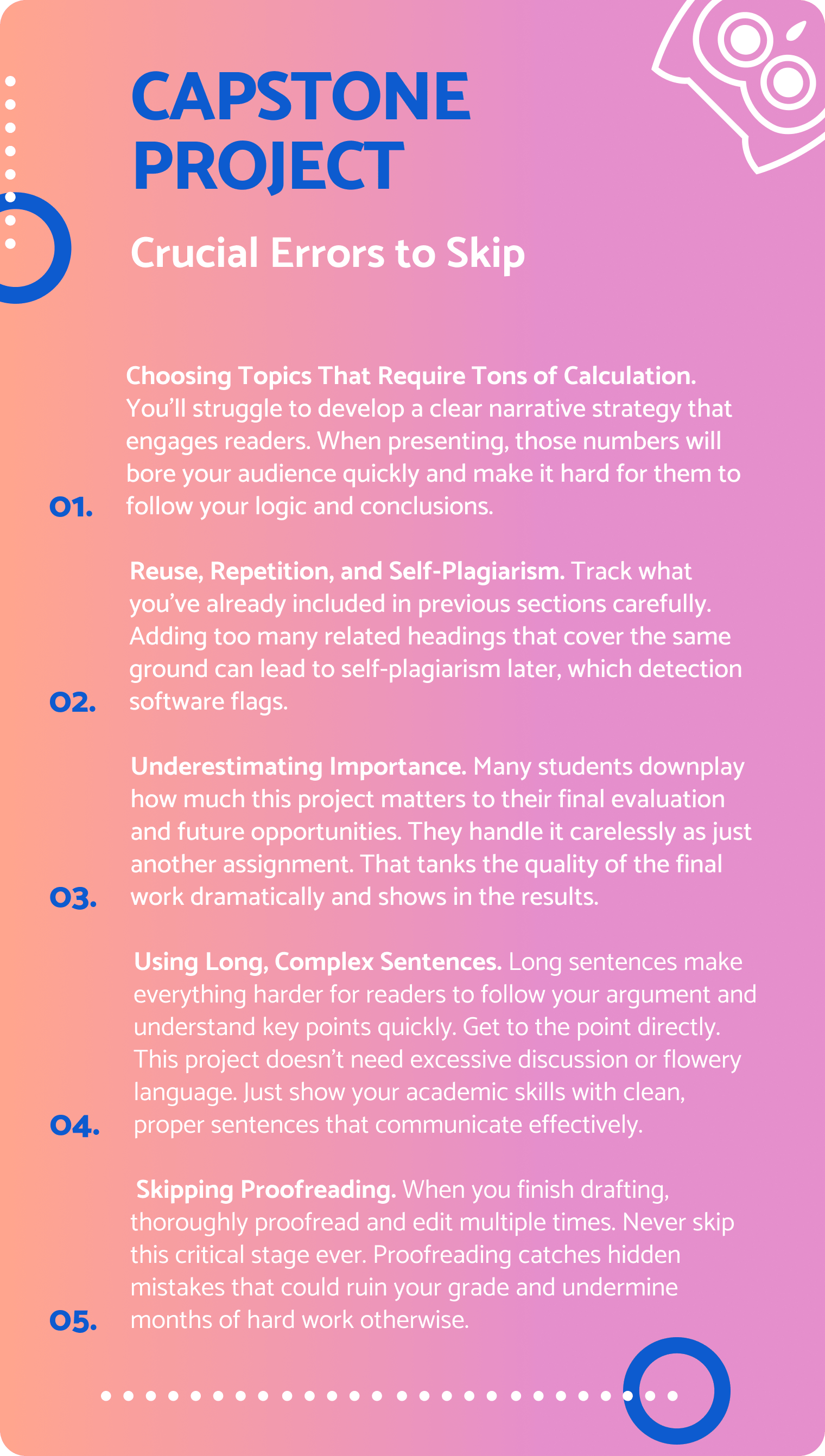
Summarizing the Capstone Project
This type of project is one of the final assignments college students complete before graduating and entering the workforce.
Given how important the capstone study is to your academic record and future prospects, your outline must serve as a solid foundation for everything else.
Many students struggle with their projects because of the sheer volume of workload and complexity involved. Some even give up partway through because they doubt their abilities or feel completely overwhelmed.
Don’t let that be you.
If you can’t handle parts of your project alone despite your best efforts, paying someone to do your project might be worth considering seriously.
They’ll approach your project from a professional perspective, bringing experience and expertise you might currently lack.
With PapersOwl’s help and clear requirements for this kind of paper understood upfront, you can absolutely achieve something worthwhile and impressive!