
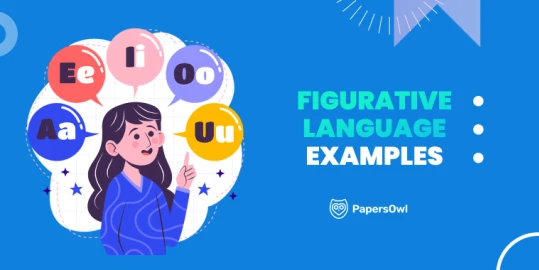
What is figurative language?
It’s language that goes beyond the literal meaning of words to express ideas in a vivid, imaginative way. Instead of plain facts, figures of speech create images that convey complex ideas and emotion.
Figurative language examples help us say more than literal words can. They add color, depth, and feeling to writing and everyday speech.
- They go beyond literal definitions.
- They create vivid imagery and emotional impact.
- They help convey meaning in fresh ways.
Next, I’ll explore the most common types and how they work.
What Is Figurative Language?
This term is applied to a literary device that uses words in a non-literal way to express ideas. The literal definition of a word explains its exact meaning. But figurative language plays with context, human experience, and imagination.
If I say, “She is very busy,” that’s literal language.
If I say, “She has a million things on her plate,” that’s figurative language. There aren’t actual objects stacked on a plate. The intended meaning is that she has many tasks to handle at once.
See the shift?
Literal words focus on facts, whereas figurative expressions focus on effect.
In the English language, we constantly move between literal sense and figurative meaning. Even in everyday conversation, we say things like:
- “I’m starving” (extreme hunger, not literal danger).
- “I’ve told you a million times.”
- “Time is flying.”
We do this because human communication is emotional. We don’t just want to inform. We want to create a stronger connection. If figurative language doesn’t come naturally to you, a college paper writer can help your essay hit that same emotional note.
Types of Figurative Language Used in a Sentence
1. Simile
A simile compares unlike things using “like” or “as.” It makes a direct comparison clear and visible.
Why should we use it? Similes create a vivid image quickly, which is why they are common in creative writing and everyday speech. They help readers understand complex ideas through familiar images.
Examples:
- “My love is like a red, red rose.” – Robert Burns.
- “Shall I compare thee to a summer’s day?” – William Shakespeare.
- Her smile was as bright as the sun.
- He ran like the wind.
- I’m as hungry as a wolf.
- The classroom was as quiet as a library.
- She clung to hope like a lifeline.
- He sleeps like a rock.
2. Metaphor
A metaphor equates two unlike things directly. It does not use “like” or “as.” It says something is something else.
The role of metaphors is to add depth and nuance. They don’t soften the link and create a stronger connection between ideas. And that’s their power.
Examples:
- “All the world’s a stage.” – William Shakespeare.
- “Juliet is the sun.” – from Romeo and Juliet.
- Time is money.
- The classroom was a zoo.
- He is a real Romeo.
- Her voice was velvet.
- Ideas are seeds.
- That test was a nightmare.
3. Personification
This rhetorical device gives human characteristics to inanimate objects or nonhuman things. When we give human qualities to a nonhuman object, the world suddenly feels animated. Abstract ideas gain movement, emotion, and even intention.
If you wonder, “What are examples of figurative language that truly bring scenes to life?”, personification is one of the strongest answers.
Examples:
- The wind whispered through the trees.
- The alarm clock screamed at me.
- The sun smiled down on us.
- The stars danced in the sky.
- The opportunity knocked on my door.
- The car complained as it started.
- The city never sleeps.
4. Onomatopoeia
Onomatopoeia uses words that imitate a sound. It creates vivid imagery and sensory detail. No wonder comic books love this device. So do children’s stories. Sound becomes part of the experience.
Examples:
- Buzz
- Bang
- Splash
- Tick-tock (like an alarm clock)
- Boom
- Crack
- Hiss
5. Oxymoron
This figure of speech combines two contradictory words that seem impossible when placed together. At first glance, the expression may sound illogical, but that tension is exactly the point.
An oxymoron highlights contrast and sharpens meaning. By joining opposites, it draws attention, creates surprise, and encourages the reader to pause and think more deeply about the idea being expressed.
Examples:
- Deafening silence
- Bittersweet
- Jumbo shrimp
- Living dead
- Clearly confused
- Awfully good
6. Hyperbole
Hyperbole is an exaggerated statement used for emphasis. It’s an extreme exaggeration used to create humor, drama, or emotional intensity. In advertising, hyperbole grabs attention fast.
Examples:
- I’ve told you a million times.
- I’m dying of embarrassment.
- This bag weighs a ton.
- I’m so hungry I could eat a horse.
- It took forever.
- I laughed for a million years.
- “Red Bull gives you wings.” – Red Bull.
- “The best a man can get.” – Gillette.
- “Probably the best beer in the world.” – Carlsberg.
7. Alliteration
Alliteration repeats the same consonant sound at the beginning of nearby words. It is applied to make language musical and memorable. That repeated consonant sound sticks in the reader’s mind.
Examples:
- Peter Piper picked a peck of pickled peppers.
- Wild and whirling words.
- Dark and dreadful days.
- Silver silent sea.
- Busy buzzing bees.
- Bright blue butterflies.
- Clever cats creep quietly.
- Freshly fried fish.
- Lazy lions lounge.
8. Idiom
An idiom is a phrase whose meaning differs from the literal meaning of its individual words. When discussing figurative language definition and examples, idioms show how the sense depends on culture and context rather than direct interpretation.
These rhetorical devices make speech more natural, expressive, and relatable. Translated word-for-word, they may sound strange. But within context, their meaning becomes clear.
Examples:
- Break the ice
- Hit the sack
- Spill the beans
- Kill two birds with one stone
- Piece of cake
- Under the weather
- Let the cat out of the bag
- Cost an arm and a leg
- Once in a blue moon
- The ball is in your court
9. Allusion
This is a reference to a famous person, event, work of literature, or cultural idea. It adds depth and meaning without lengthy explanation, relying on shared knowledge between the writer and the reader.
Allusions make writing richer, more layered, and often more engaging, rewarding readers who recognize the reference. They appear in literature, advertising, memes, songs, and everyday speech.
Examples:
- He met his Waterloo.
- She has the patience of Job.
- This place feels like Pandora’s box.
- He acts like a real Romeo (from Romeo and Juliet).
- “I’m feeling like a Monday morning” (common meme).
- “Just do it” (Nike slogan reference).
- “I got a blank space, baby” (Taylor Swift song).
- “Winter is coming” (Game of Thrones reference in pop culture).
10. Irony
Irony occurs when the intended meaning of words or actions is different from, or even opposite to, what is said or expected. It adds humor, sarcasm, or subtle criticism, and often depends on context to be understood.
Examples:
- Saying “Great weather!” during a storm.
- A traffic cop gets a speeding ticket.
- “I absolutely love Mondays” (meme).
- “This burger is so fresh it walks itself to the table” (advertising).
- A “Do Not Disturb” sign on a party room.
11. Euphemism
A euphemism is a mild or indirect expression used to replace words that might sound harsh, blunt, or uncomfortable. It helps communicate sensitive topics politely and can soften the emotional impact of difficult subjects.
Examples:
- Passed away (instead of died)
- Let go (instead of fired)
- Senior citizen
- Collateral damage (instead of civilian casualties)
- Correctional facility (instead of prison)
- Downsizing (instead of layoffs)
12. Pun
A pun is a playful use of words that have multiple meanings or similar sounds. It’s a classic example from the figurative language list that shows how individual words can carry different ideas at once. Puns add humor, wit, and clever wordplay, making writing or speech more entertaining and memorable.
Examples:
- A bicycle can’t stand on its own – it’s two-tired (too tired).
- I’m reading a book about anti-gravity – it’s impossible to put down.
- I wondered why the baseball was getting bigger… then it hit me.
- A boiled egg every morning is hard to beat.
- I used to be a banker, but I lost interest.
13. Synecdoche
This is a figure of speech in which a part represents the whole, or sometimes the whole represents a part. It condenses ideas powerfully and creates sharp, memorable images.
Examples:
- All hands on deck.
- The White House issued a statement.
- New wheels (meaning a car).
- The crown approved the law.
- Silicon Valley is investing in AI.
14. Paradox
A paradox is a statement that appears self-contradictory or illogical at first glance but invites readers to think more carefully about complex ideas. It is used to express layered, thought-provoking ideas in a striking and memorable way.
Examples:
- Less is more.
- The only constant is change.
- I must be cruel to be kind.
- The beginning of the end.
- You have to spend money to make money.
- The more you learn, the less you know.
- Silence can be louder than words.
Comparative table
| Type | Brief essence | Example |
|---|---|---|
| Simile | Direct comparison using like/as | As brave as a lion |
| Metaphor | Metaphor equates unlike things | Time is a thief |
| Personification | Gives human ability to nonhuman things | The wind whispered |
| Onomatopoeia | Sound-imitating words | Buzz |
| Oxymoron | Two contradictory words | Bitter sweet |
| Hyperbole | Extreme exaggeration | I’ve said it a million times |
| Alliteration | Same consonant sound repeated | Silver silent sea |
| Idiom | Meaning not literal | Break the ice |
| Allusion | Cultural reference | Real Romeo |
| Irony | Opposite of expectation | A fire station burns |
| Euphemism | Softened expression | Passed away |
| Pun | Wordplay | Two tired |
| Synecdoche | Part represents whole | All hands |
| Paradox | Contradictory truth | Less is more |
How to Practice and Use Figurative Language
In Literature
Figurative language adds emotional depth and texture. Think about Romeo and Juliet.
Without metaphors and similes, the love story would feel plain and distant. The famous “summer’s day” comparison does more than describe beauty. It creates a mood. It shapes how we feel.
When you write a novel or poem, try to:
- Replace one literal sentence with a metaphor.
- Turn abstract ideas like fear, hope, or regret into images we can see.
- Use personification to build the atmosphere. Let the house breathe. Let the wind argue.
- Ask yourself, Can I create a vivid image here instead of explaining?
But here’s what many writers find complicated.
Simple tips for stronger prose
- Fit the genre. Romance and fantasy allow richer imagery. Thrillers usually need sharper, simpler language. Adjust your style to the story you are telling.
- Do not overload your writing. Too many similes and metaphors can feel heavy. Examples of figurative language in literature should add depth, not distract. Use it with purpose.
- Show themes through images. Instead of explaining ideas, turn them into concrete pictures. A fading candle can suggest time running out. Images often speak louder than explanations.
Above all, use figurative language with purpose. Every image should serve character, mood, or theme. If it does not, trim it. Strong writing is not about decoration. It is about intention.
In Everyday Life
We use figures of speech in everyday conversation without even noticing. It makes our language more expressive and alive. Instead of relying only on literal language, we often choose phrases that create a vivid image.
| Instead of saying: | Say like this: |
|---|---|
| I’m tired. | I’m running on empty, or I’m wiped out. |
| It’s difficult. | It feels like climbing a mountain. |
| I’m very hungry. | I could eat a horse. |
| It’s raining heavily. | It’s raining cats and dogs. |
Feel the shift? The literal meaning stays the same, but the expression becomes more engaging.
Best ways to practice every day:
- Keep a figurative language journal. Write down new expressions you hear and note their meaning and context.
- Use one new figurative phrase each day in conversation. Start small and keep it natural.
- Watch shows or movies in English. Pause when you hear interesting expressions and write them down.
- Notice figurative language in songs, ads, and memes. Ask yourself what deeper meaning they convey.
- Rewrite one plain sentence from your day using a metaphor or simile.
In Marketing
Marketing often relies on hyperbole and alliteration to grab attention quickly.
Catchy phrases and figurative language examples like “Fresh and fast delivery” or “Deals that blow your mind” are designed to stick in memory and create excitement. Strong sound patterns and bold exaggeration help brands stand out.
But be careful. If every sentence is dramatic, the message can feel forced or unrealistic.
How to Keep it Balanced
Expressions like “sly as a fox,” “busy as a bee,” or “cold as ice” feel tired. They no longer create a vivid image. Choose a fresh language that fits your character.
Look for fresh ways. Ask:
- What image fits my personal voice?
- Does this help convey meaning?
- Or am I decorating without purpose?
Figurative language should add depth, not confusion.
Quiz time. Can you name the type?
Let’s make this fun. Read each line and guess which type of figures of speech it uses.
-
“The wind whispered through the night.”
Personification
-
“I’ve waited a million years.”
Hyperbole
-
“Life is a journey.”
Metaphor
-
“As cold as ice.”
Simile
-
“Deafening silence.”
Oxymoron
-
“The White House announced new rules.”
Synecdoche
-
“Time is a thief.”
Metaphor
-
“Busy buzzing bees.”
Alliteration
-
“Break the ice.”
Idiom
-
“Less is more.”
Paradox
How many did you get right?
If a few surprised you, that’s good. That means you’re starting to notice how often figurative language appears in everyday speech. Once you see it, you can’t unsee it. And that’s when your writing begins to level up.
Final Thoughts
Figurative language ideas transform ordinary speech into something alive and memorable. It helps writers to convey complex ideas in ways that feel human and relatable.
Instead of just stating facts, you create emotion, movement, and vivid imagery that stays in the reader’s mind. A single metaphor can reveal deeper meaning. A well-placed simile can build a stronger connection. Even a touch of personification can make abstract ideas feel real.
I recommend that you start small and experiment with fresh expressions instead of common clichés. Let your voice grow bolder with practice.
Words are tools, but they are also magic. So, use them bravely. And if you need guidance writing your texts or polishing figurative devices, PapersOwl can support you with expert feedback when it matters most.