
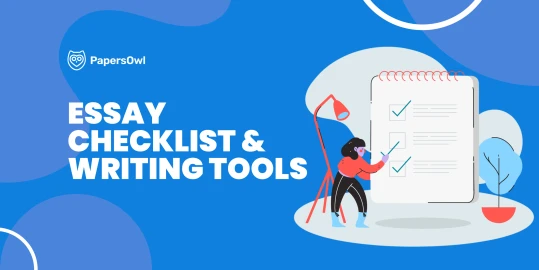
An essay checklist covers four steps: forming a clear thesis, building a structured argument, checking for plagiarism, and formatting citations. Get these right and your paper is ready to submit.
At PapersOwl, we look at thousands of papers every day — and the same mistakes keep costing students grades. I made this checklist to fix that. It takes you step by step, from idea to final draft.
Step-by-Step Guide for Best Essay Writing
These guidelines help students plan, write, and polish essays for clear and strong results.
Before you dive into the editing process, you can use a free essay maker to generate your first draft and outline your thoughts quickly.
Step 1: Formulating an idea (focus on thesis & title)
Every good essay begins with a precise thesis statement. Without it, your paper loses direction. Indeed, many learners start too broadly. They pick a topic like “education” or “technology,” and that creates confusion later.
Instead, narrow your focus. Turn a big idea into a specific argument. For example, instead of “social media,” focus on how it affects student productivity during a course.
Ask yourself:
- What is my main idea?
- What point do I want to prove?
- What answer am I giving?
Your thesis should be precise and arguable. It should show your position and guide your body paragraphs.
Titles matter too. A compelling title helps introduce your topic and shows clarity from the start.
I hear this often from students: “I don’t know how to begin.” At PapersOwl, we built tools to support this step.
- Our Thesis Generator helps you create a focused argument in seconds. This free essay writing assistant gives structured suggestions based on your topic.
- Our Title Generator helps you present your idea in a clear, academic style.
Step 2: Building an argument (focus on conclusion & outline)
Once you have a thesis, you need structure. This is where many essays fail. Ideas are good, but the organization is weak.
I recommend starting with an outline. It helps you keep your writing organized and shows how each paragraph backs up your main point.
This is what each paragraph in the body should have:
- A well-thought-out topic sentence.
- Proof that supports.
- Short descriptions.
- A way to get back to what you were saying.
Think of each paragraph in your essay as a link in a chain. If one of them breaks, the whole argument gets weaker.
Now, let’s talk about the conclusion. Many students just repeat the introduction. That’s a mistake. A strong conclusion should:
- Summarize key points.
- Show the value of your argument.
- Leave a final impression.
It should not feel copied. It should feel like a natural ending.
For this reason, we developed our Conclusion Generator to help you avoid repetition. The tool looks over your draft and writes a new ending based on what you wrote. It focuses on clarity and logical flow.
At PapersOwl, we constantly improve our software. We study how students write and refine each checklist for writing an essay based on real student needs. We have updated our system to provide better suggestions.
The result? More confident writing and stronger arguments.
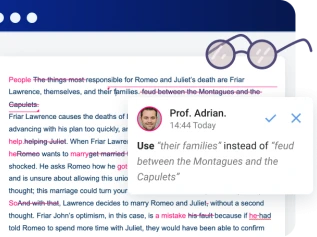
Step 3: Polishing and uniqueness (focus on paraphrasing & plagiarism)
A well-structured essay can still lose points if it isn’t original. This is a big deal right now. Many students use AI or copy text without verifying that it is correct. That leads to plagiarism risks and “AI-detected” flags.
Here’s the truth. You must always review your draft, revise it, and read it over again.
Pay attention to:
- Rewording sources.
- Checking spelling and grammar.
- Making sentences clearer.
- Correcting mistakes in punctuation.
Good writing is clear and sounds natural. It sounds like you.
We created tools to support this step. Our Paraphrasing Tool helps you rewrite text while preserving its meaning. It improves style and avoids repetition.
And Plagiarism Checker scans your paper quickly. It compares your text with a large database of academic articles and online sources. Our latest update improved speed and accuracy. Now, results come faster and include deeper analysis.
If you want success, don’t skip this step. In any college essay checklist, editing and proofreading are just as important as writing.
Step 4: Final gloss (focus on citations)
Citations are a common pain point. There are rules for each style, like MLA, APA, and Chicago.
You must cite all sources from books, articles, websites, or interviews correctly, as missing references can affect your grade. Even small formatting mistakes matter.
Your professor expects accuracy. So, your paper must follow the intended style.
Our Citation Generator makes this easier. You enter information about your source, and the tool generates correctly formatted citations in seconds. It works with most styles, like APA and MLA.
Keep in mind:
- Always add references.
- Check the format.
- Keep things the same throughout your paper.
This last step gives your essay a polished look.
Why My Guide Is Useful for Teachers & Students
I created this guide to support both sides of the classroom.
Students can use it to come up with new ideas, improve their writing, and make their points clearer. It saves time, makes things clearer, and gives you more confidence with each assignment.
Also, teachers like it because the papers are better organized, easier to grade, and have fewer basic mistakes.
I also give you an essay writing checklist to help you put everything together.
It is continually being updated to meet the latest academic standards for 2026. It helps students check their work before they turn it in, find small mistakes, and ensure that every part of the essay is clear, complete, and ready to earn a good grade.
A Few Last Thoughts
We at PapersOwl think that every student can write better. Success is possible with the right tools and advice. That’s why our team launched new updates across all tools for faster edits, better results, and more accuracy.
Thousands trust us. Try the full set of our writing tools and join the success stories. Build your confidence and submit your next paper with clarity!