
Summer used to arrive with a to-do list: the festival, the trip, the rooftop, the group chat that never sleeps. The internet has spent this season describing the opposite. JOMO instead of FOMO. Soft hermitting instead of a packed calendar. An analog bag instead of a phone. A dumb phone instead of a smartphone. And when it all becomes too much, the summer crash-out.
So we asked American Gen Z whether any of this is real, or whether it is just vocabulary. The short answer: most of these trends are already mainstream, and the one trend that gets the most coverage is the one almost nobody actually does.
Key Insights
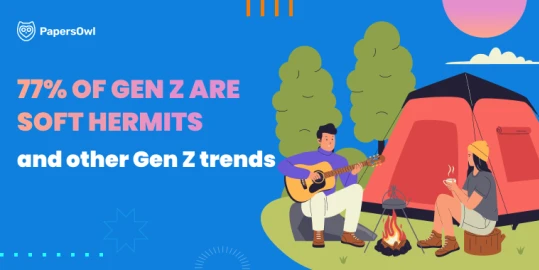
- 77% recognise themselves in soft hermitting — turning down plans for a quiet night in is the majority behaviour, not a fringe one.
- JOMO beats FOMO roughly two to one — 50% feel fine or good about missing out; only 27% feel anxious about it.
- Money is the loudest reason across the whole study — 61% of those who enjoy missing out say it saves money, 42% of people who soft-hermit say going out costs too much, and 58% of those who crashed out this summer blame summer expenses.
- 54% have had a summer crash out, and 27% have had more than one.
- 51% now carry an analog bag regularly or sometimes — and only 9% say the aesthetic has anything to do with it.
- Only 5% prefer conversation-first socializing — the activity-based hangout has effectively replaced the open-ended one.
- The dumb phone is the exception — just 9% use one regularly, while 44% have never considered it.
- Men cite cost, women cite depletion — among people who soft-hermit, 50% of men say going out costs too much (vs 35% of women), while 61% of women say socializing drains them (vs 50% of men).
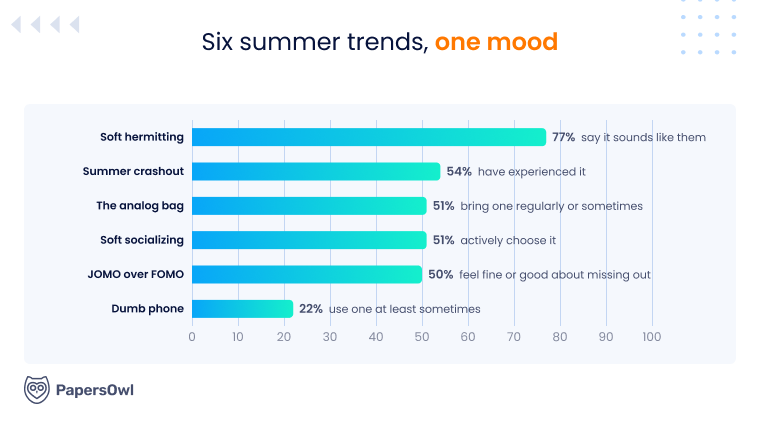
Read together, these numbers describe one behaviour, not six. People are still socializing, still online, still making plans — they are simply doing less of all of it, on purpose, and they no longer feel bad about it.
The rest of this report breaks each trend down, then looks at what changes when the data is split by gender — because men and women are opting out for noticeably different reasons.
1. JOMO Won. FOMO Is Now a Minority Position.
We asked which feeling shows up more often after missing out on social plans, events, or online activity — the joy of missing out, or the fear of it. FOMO lost, and not narrowly.
- 36% sometimes enjoy missing out, depending on the situation
- 23% simply prefer to be included
- 21% usually feel anxious or disappointed when they miss out
- 14% often feel relieved or happy to miss out
- 6% almost always worry they are missing something important
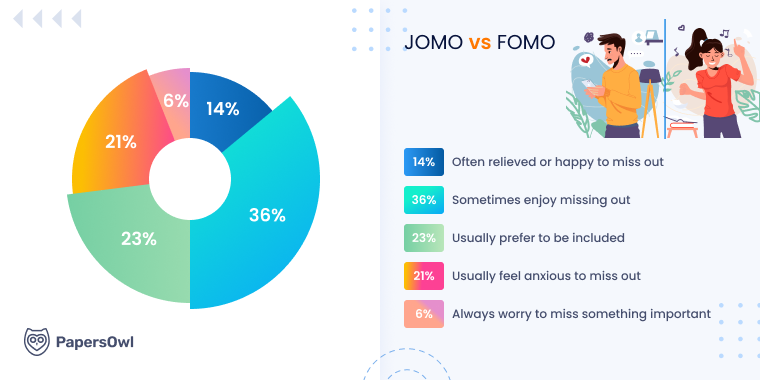
Add the two JOMO answers together and half of respondents (50%) are fine with missing out. Add the two FOMO answers and you get 27%. That is close to a two-to-one split in favour of staying home.
👀 Women lean slightly more anxious: 31% of women are FOMO-leaning versus 24% of men. It is a modest gap, but it points in the same direction as everything else in this study — women are more likely to describe the social calendar in emotional terms, men in practical ones.
Then we asked the people who enjoy missing out why it feels good. The top answers are not about self-care. They are about money and bandwidth.
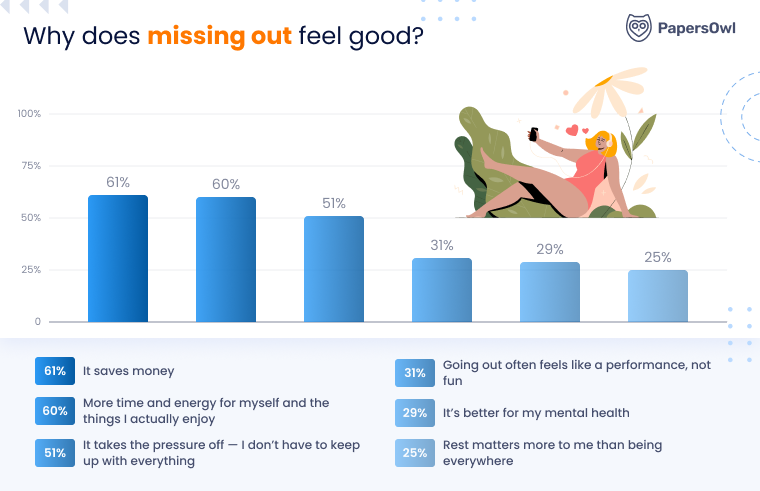
💸 61% say it saves money and 60% say it buys back time and energy. Only 29% frame it as a mental health decision. JOMO, as people actually describe it, is less a wellness philosophy than a budgeting strategy that happens to feel good.
The sharpest gender gap in this question runs the opposite way to the stereotype: among men who enjoy missing out, 38% say it is better for their mental health, versus 18% of women. Men are also more likely to say rest matters more than being everywhere (31% vs 18%). Women in this group describe the same decision in flatter, more logistical language.
2. Soft Hermitting Is Not a Trend. It’s the Default.
Soft hermitting means deliberately turning down plans and spending more free time at home, choosing quiet over social events. It is the single most widely recognised behaviour in this study — and it is not close.
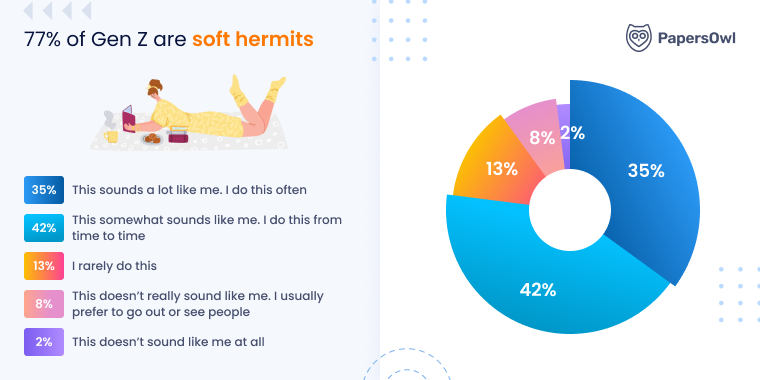
🏠 77% say soft hermitting sounds like them, and just 9% reject the description outright. A behaviour that gets written about as a quirky micro-trend is, statistically, the majority experience.
Women own it more openly: 40% of women say it sounds a lot like them, compared with 31% of men. Men are more likely to park themselves in the softer “from time to time” answer.
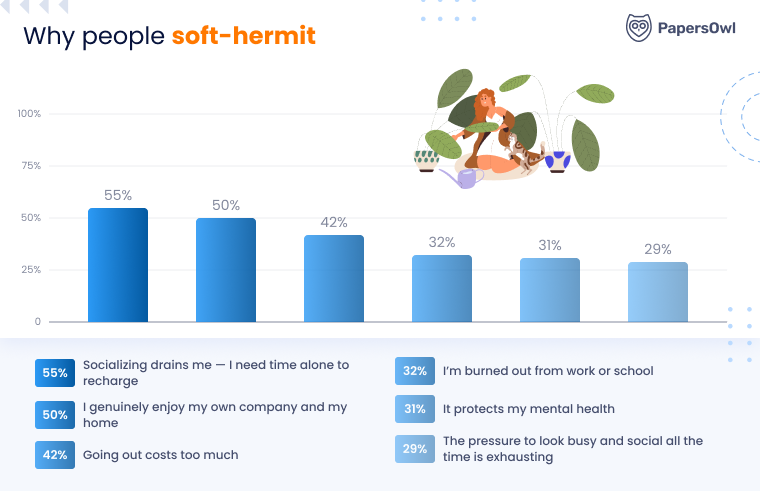
The top two reasons are not avoidance — they are preference. 55% say socializing drains them and 50% say they genuinely like being home. Only after that come the harder constraints: 42% say going out costs too much, and 32% are simply burned out from work or school.
⚖️ This is where the gender split becomes a real story. Men are far more likely to name cost: 50% versus 35% of women — a 15-point gap. Women are more likely to name depletion: 61% say socializing drains them, versus 50% of men. Same behaviour, two different explanations.
3. Soft Socializing: Keep the Activity, Lose the Small Talk
Soft socializing means low-pressure hangouts built around an activity — puzzle nights, book clubs, run clubs, crafting, silent reading — where nobody is expected to perform conversation for three hours. Almost nobody in the study rejects it.
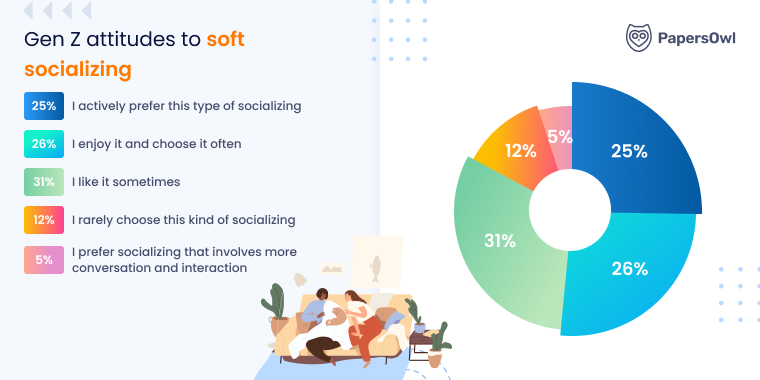
🧩 51% actively choose soft socializing, another 31% like it situationally, and only 5% say they would rather have the conversation-first version. The traditional hangout — talk, drinks, no agenda — now has almost no committed defenders.
The reasons why explain the shift better than the headline number does. An activity is not a substitute for connection; it is scaffolding for it.
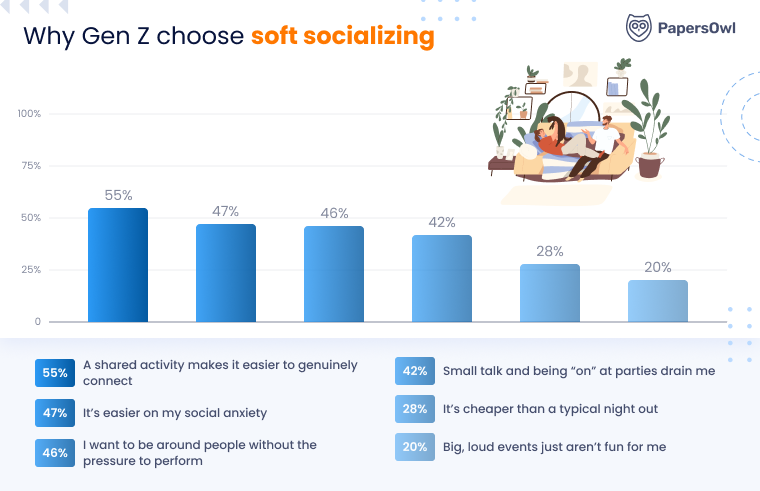
55% say a shared activity makes it easier to genuinely connect — the most chosen answer by a clear margin. Nearly half (47%) say it is easier on their social anxiety, and 46% want to be around people without the pressure to perform. This is not social withdrawal. It is people redesigning socializing so it costs them less.
The money pattern repeats: 34% of men choose soft socializing because it is cheaper, versus 21% of women. Women are more likely to say big, loud events simply are not fun for them (24% vs 15%).
4. The Analog Bag: Half of People Now Pack Something to Do Instead of Scrolling
An “analog bag” means carrying screen-free activities — a book, a journal, crosswords, knitting, a sketchbook — to reach for instead of a phone. It sounds like a niche aesthetic. It is a coin flip.
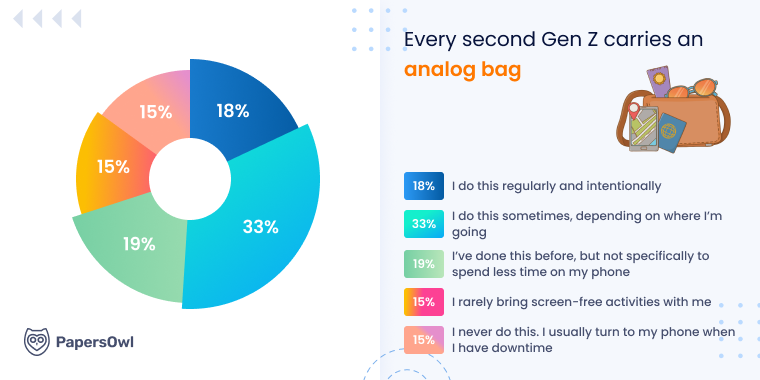
📖 51% carry an analog bag regularly or at least sometimes, while only 15% say they never do it. The behaviour is close to evenly split between deliberate practice and situational habit.
What is more interesting is the stated goal. The people doing it are not chasing a look — they are trying to repair something.
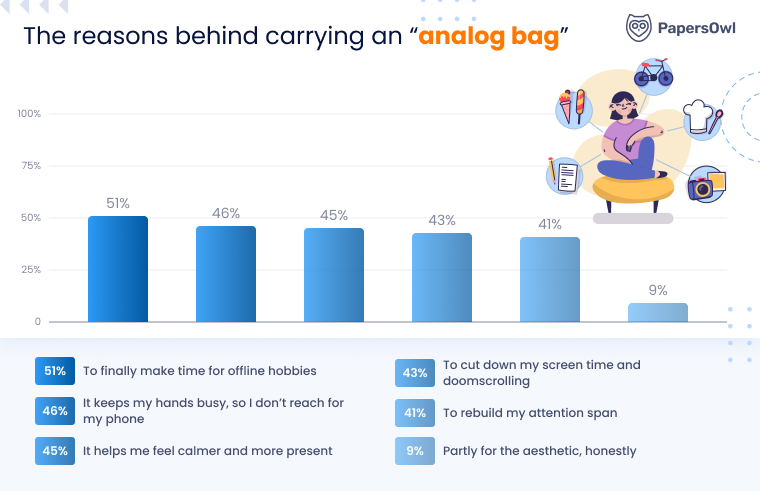
🧠 Only 9% admit the aesthetic is part of it. The top motivations are functional: making time for offline hobbies (51%), keeping hands busy (46%), and feeling calmer and more present (45%). 41% say they are trying to rebuild their attention span — which is a striking thing for people to say about themselves out loud.
This question produced the widest gender gap in the entire study. 51% of men say the goal is rebuilding their attention span, compared with 31% of women — a 20-point difference. Women are more likely to say it helps them feel calmer and more present (51% vs 39%). Men describe a performance problem; women describe a regulation problem.
5. The Dumb Phone Is the Trend Everyone Writes About and Almost Nobody Does
Switching from a smartphone to a flip phone or other basic handset has generated more headlines than any other item in this study. It has also generated the smallest numbers.
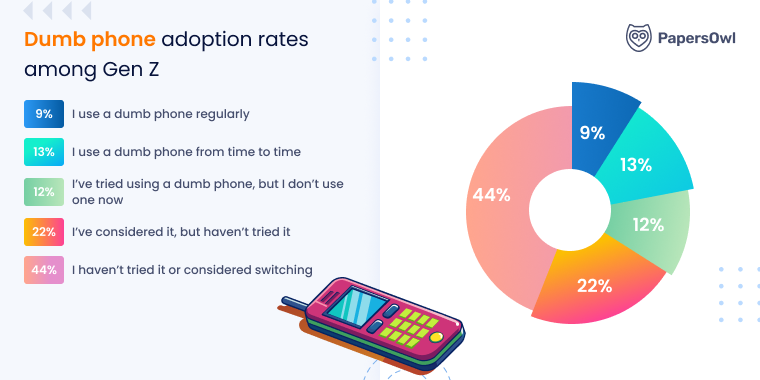
📵 Just 9% use a dumb phone regularly, and 22% use one at least occasionally. Meanwhile 44% have never even considered it. The interesting group is the 22% who have thought about it and not acted — the intention is far ahead of the behaviour.
Men experiment more: 40% of men have used or tried a dumb phone at some point, versus 29% of women. Among everyone who did make the switch, the motivation is almost entirely relational rather than productivity-driven.
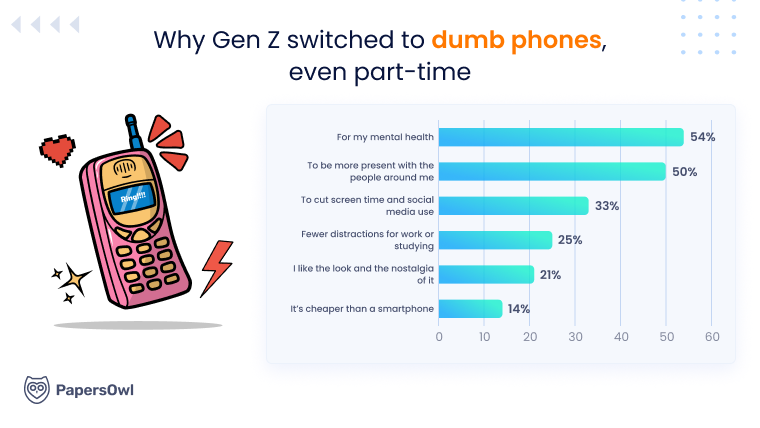
54% switched for their mental health and 50% to be more present with the people around them. Only 21% cite the retro look. Whatever the coverage suggests, this is not primarily an aesthetic movement — it is a small group of people trying to be in the room they are physically in.
6. The Summer Crash Out: More Than Half Have Hit the Wall
A “summer crash out” means hitting an emotional breaking point during summer — because of heat, packed plans, money stress, or the pressure to have a perfect season. It is supposed to be the easy time of year. For most people, it is not.
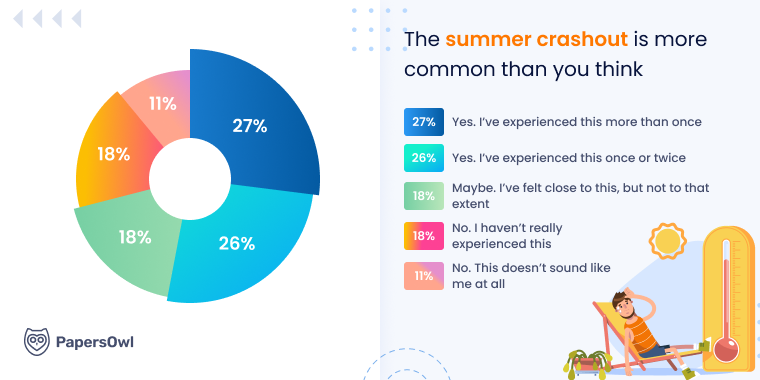
🌪️ 54% have had a summer crash out, and 27% have had more than one. Add the 18% who say they have come close and you are looking at roughly seven in ten people who have felt summer tip from fun into too much.
Only 11% say it does not sound like them at all. The drivers make it clear this is an economic story as much as an emotional one.
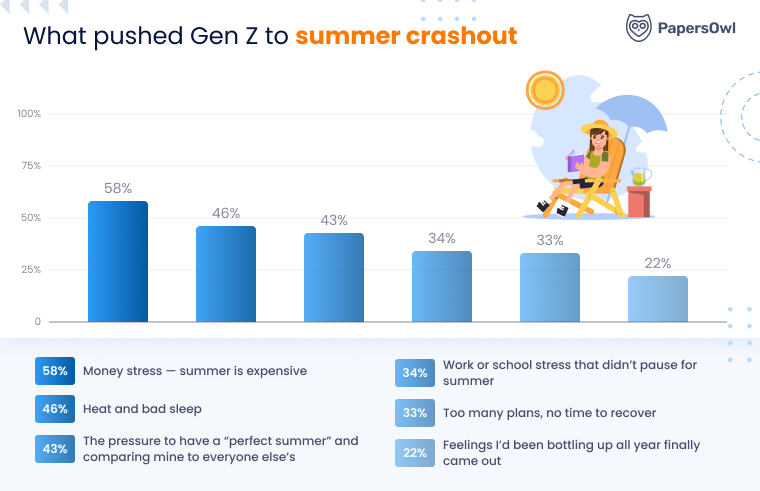
💸 Money is the number one cause, named by 58% — well ahead of heat and bad sleep (46%) and comparison pressure (43%). Summer arrives with a price tag: travel, events, rounds, weddings, festivals. The season that is meant to be a break is the season that costs the most.
Women are more likely to point to the perfect-summer pressure (46% vs 39% of men); men are more likely to blame work or school stress that never paused (38% vs 30%). Both are versions of the same problem: summer is now something to keep up with, not something to rest inside of.
7. Men and Women Are Opting Out for Different Reasons
Across every trend in this study, men and women opt out at broadly similar rates. What differs is the reason they give — and the difference is consistent enough to be worth stating plainly.
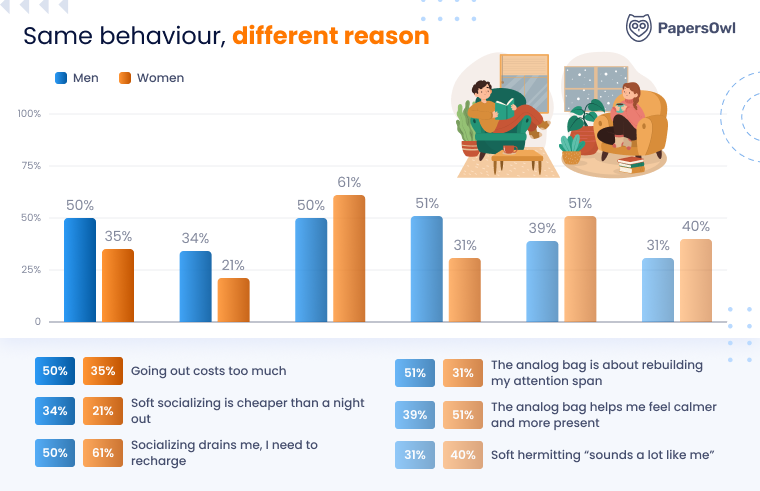
💰 For men, opting out is repeatedly framed as a financial and functional decision. They are 15 points more likely to say going out costs too much, 13 points more likely to choose activity-based hangouts because they are cheaper, and 20 points more likely to describe screen-free time as attention-span repair.
🫧 For women, the same choices are framed as capacity management. They are 11 points more likely to say socializing drains them, 12 points more likely to say offline time helps them feel calmer and more present, and 9 points more likely to say soft hermitting sounds a lot like them.
One caveat worth keeping: this pattern is not universal. When asked why missing out feels good, it was men who were far more likely to give the mental health answer (38% vs 18%). The framing split is real, but it is not a clean rule.
The Bottom Line: This Isn’t Antisocial. It’s Rationed.
It would be easy to read this data as a generation retreating indoors. The numbers do not support that. People are still socializing — 82% are open to activity-based hangouts, and only 5% say they would rather have the conversation-first version. What has changed is that social life is now something people budget rather than something they simply do.
Three constraints show up again and again: money, energy, and attention. Money is the most frequently named reason across four separate questions. Energy explains why the format of socializing has shifted toward puzzle nights and run clubs, where connection does not require constant performance. Attention explains the analog bag — 41% of people are carrying a paperback around specifically because they no longer trust themselves with a phone in an idle moment.
And the summer crash out is what happens when those three constraints collide with a season that expects you to be having the best time of your life. 54% have hit that point, most often over money, and 43% because their summer did not look like everyone else’s.
🔑 The trend words are new. The underlying behaviour is not complicated: people are protecting the resources they have left, and they have stopped apologising for it.
Methodology
This study surveyed 3000 Americans aged 18-28 residing in the United States. The survey was conducted in August 2026. Participants were recruited via online panels using Random Device Engagement (RDE) to ensure a diverse and representative sample. The study did not target specific ethnicities or social backgrounds. Percentages are rounded to the nearest whole number and, for multiple-selection questions, may total more than 100%.