
Somewhere between an overdue to-do list and another notification they didn’t ask for, Gen Z started fantasizing about a very different kind of life.
Not a vacation. Not a digital detox. Something more specific: the unhurried existence of an Italian grandmother. Slow mornings, homemade meals, long lunches with people worth having around, walks to the market, no metrics to hit, no personal brand.
This is nonna maxxing — a lifestyle trend built around deliberately living like a nonna: cooking from scratch, moving slowly through the day, prioritizing presence over productivity, and treating the afternoon as something to be savored, not optimized.
It broke into mainstream conversation in early 2026 and resonated almost instantly. Which raises the obvious question: why now? PapersOwl surveyed 3000 of young Americans aged 18-28 to find out what’s actually driving it. The answers are less about pasta and more about pressure.
Key Insights
- 87% of Gen Z say anxiety and pressure are common experiences among people their age
- 80% say the pressure to achieve contributes significantly to their stress
- 76% believe their stress levels would drop if external validation were less central to daily life
- 62% admit their external achievements often feel more important than their mental well-being
- 53% have increased escapist behaviors — binge-watching, gaming, scrolling — as a way to cope
- 46% are now actively avoiding news and social media content because it overwhelms them
- 62% turn to physical activity as their top stress-relief mechanism — and most aren’t logging it as a workout
🍝 First, What Is Nonna Maxxing?
The nonna is not a productivity influencer. She doesn’t batch-cook for macros or track her steps. She makes the sauce because she always makes the sauce, takes her time doing it, and considers the afternoon well spent.
Nonna maxxing takes that energy and applies it intentionally: fewer screens, more tactile tasks. Natural rhythms over scheduled optimization. Analogue pleasures — bread, walks, neighbours, afternoon light — over digital ones. The aesthetic is Italian grandmother. The impulse behind it is exhaustion.
🔎 It’s not about becoming a grandmother. It’s about living like someone who never needed a wellness app to feel well.
The Pressure Problem
To understand why nonna maxxing resonates, you have to start with what Gen Z is navigating every day.
87% of young people say stress and anxiety are common among people their age. Not occasional. Not situational. Just common, in the way that bad weather is common — expected, unremarkable, and relentless.
The source isn’t mysterious. 80% trace it directly to achievement pressure: the expectation to show up, deliver, and do it visibly. And the visibility matters. As one respondent put it: “Since everything is posted on social media, it’s there for the world to see if you ever mess up.”
The body keeps score, too. 66% experience physical symptoms of anxiety — sweating, shaking, a racing heart — before or during stressful moments. 77% feel nervous before big events, presentations, or high-stakes situations often or always.
💡 “Excellence is expected by everyone and everywhere, but achieving it is not always possible.” That sentence, from one of our respondents, could be the founding manifesto of the nonna maxxing movement.
The Validation Trap
What makes this particular kind of pressure so corrosive is where it comes from. It’s not just deadlines or workloads. It’s the architecture of modern life — likes, grades, metrics, annual reviews — that turns self-worth into a number that needs to be refreshed daily.
76% of Gen Z say their stress levels would decrease if external validation were less central to everyday life. They can see the mechanism. They understand what’s happening to them. The problem is that opting out feels nearly impossible when the whole system runs on it.
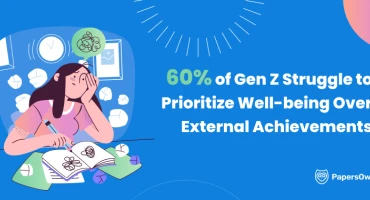
And the pressure compounds. 62% say they often prioritize external achievements over their own mental well-being. Not because they want to. Because the stakes of falling short feel higher than the cost of burning out.
The nonna, needless to say, has never checked her approval rating. Her worth is not contingent on output.
📵 Tuning Out — But Not Finding Peace
Before Gen Z found the nonna, they tried the obvious solution: just stop consuming the noise.
46% are now actively avoiding news and social media content that feels overwhelming — a striking number for a generation that practically grew up online. And it’s not passive disengagement. It’s a deliberate choice. 54% say they avoid the news specifically because it makes them anxious or overwhelmed, with nearly a quarter saying that feeling is severe enough to consistently drive them away from it.
So they’re not apathetic. They’re self-protecting. The feed is simply too much, too fast, and too relentlessly negative to absorb without cost.
But switching off the news doesn’t switch off the anxiety. That’s the trap. 53% have increased other escapist behaviors to fill the gap — binge-watching, gaming, scrolling through content that’s nominally softer but still screen-based. Not as leisure. As relief.
The problem is that it doesn’t fully work. When asked whether escapism helps, 50% said it does both — it relieves the pressure in the moment and deepens the disconnection over time. The scroll numbs the anxiety but also eats the evening. They wake up the next day with the same inbox, the same feed waiting, and an extra hour of sleep debt.
That tension — needing to escape but finding the escape unsatisfying — is exactly the gap nonna maxxing is trying to fill.
⚠️ Tuning out the news helps. Picking up your phone to watch something else doesn’t. The nonna’s version of switching off is actually switching to something: the sauce, the walk, the conversation. That distinction turns out to matter enormously.
🌿 What They Actually Want Instead
The data doesn’t paint a picture of a generation that wants to do less. It paints a generation that wants to do things differently.
When asked what motivates them to push through hard moments, Gen Z’s top answers were personal growth and self-improvement (28%), family and caring for the people they love (23%), and a sense of responsibility and obligation (20%). Money and external recognition trail far behind.
That’s not the profile of a generation that wants to coast. It’s a generation that has been told to optimize for the wrong things and is starting to recalibrate.
🚶 The Walking Data Nobody Expected
Here’s where it gets interesting. When we asked Gen Z about their physical activity, the answers skewed very nonna.
95% were physically active at least once a month. That’s the headline. But the detail underneath it is more telling: when respondents were asked in open questions to describe what they actually do, walking appeared more than almost any other activity. Dozens of times. Unprompted.
Walking tracks. Walking a mile a day. Walking with kids. Walking as recovery. Walking because it’s affordable. Walking because, on hard days, it’s simply what’s possible.
No app required. No gym membership. No metric to hit. Just movement through the world at a human pace — which is, almost precisely, how a nonna gets around.
🍃 Gen Z’s most common form of daily movement isn’t a structured workout. It’s walking. The nonna didn’t need a step goal to tell her that.
And the why behind the movement matters just as much as the what. When asked why they train, feeling healthy came first — and mental health came a close second, well ahead of appearance or weight management. Looking good is still in the mix, but it’s no longer the point. The body is increasingly being used as a tool for emotional regulation, not output.
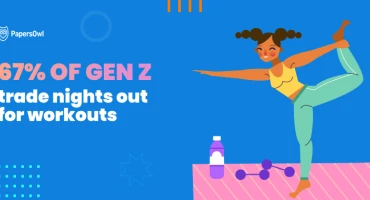
62% of Gen Z turn to physical activity as their primary coping mechanism for stress and anxiety — more than mindfulness, more than counselling, more than anything else on the list. They’re not going to the gym to get ripped. They’re going because it’s the most reliable thing they’ve found to make the noise quieter.
41% use mindfulness as a coping tool. But not the app-based, metrics-tracked, streak-maintaining kind the wellness industry sells. The nonna version: being present while doing something slow and real. Kneading dough. Tending something. Sitting somewhere without looking at anything.
Then there’s the most quietly revealing finding of all: when researchers broke down physical activity into categories, everyday movement — walking to places, being on your feet, general daily activity — was the category with the highest consistency. More people reported moving daily in this way than in any structured exercise category. It’s the movement that doesn’t feel like exercise. The movement built into the rhythm of a day lived at a human pace.
Which is, again, exactly how the nonna does it.
💡 Monday is the most stressful day for 72% of Gen Z — the return to achievement mode. Thursday, furthest from both the weekly start and end, is the calmest. The nonna doesn’t have a Monday. Every day has roughly the same rhythm. That’s kind of the point.
🚶 Slowness as a Rational Choice
Here’s what the numbers are really saying, stripped back: Gen Z is exhausted by a system that asks them to be constantly visible, constantly productive, and constantly improving — and then offers them binge-watching as the only off switch.
Nonna maxxing is the alternative hypothesis. What if the goal isn’t optimization? What if the afternoons are for something other than recovery so you can optimize again tomorrow?
It’s not escapism. It’s a value shift. The nonna didn’t opt out of life. She built a life where the good parts — food, people, light, time — weren’t the reward at the end of the day. They were the day.
Whether Gen Z can actually build that for themselves is a different, harder question. The pressures are structural. The expectations are embedded. 54% are skeptical that any coping mechanism consistently works against stress, which might be the most honest data point in this entire survey. They’re not naive about the limits of a lifestyle rebrand.
But the desire is real. 76% want less pressure from external validation. 46% are already actively avoiding the news and social feeds. 53% are looking for an escape that actually works. The nonna trend didn’t create that yearning. It just gave it a face, a name, and a very good recipe for ragù.
Methodology
Researchers from PapersOwl surveyed 3,000 Americans aged 18–28 to compile this study. The survey was conducted in March 2026. Randomly selected participants were asked to discuss their experiences, with no emphasis on a specific gender, ethnicity, or social background.